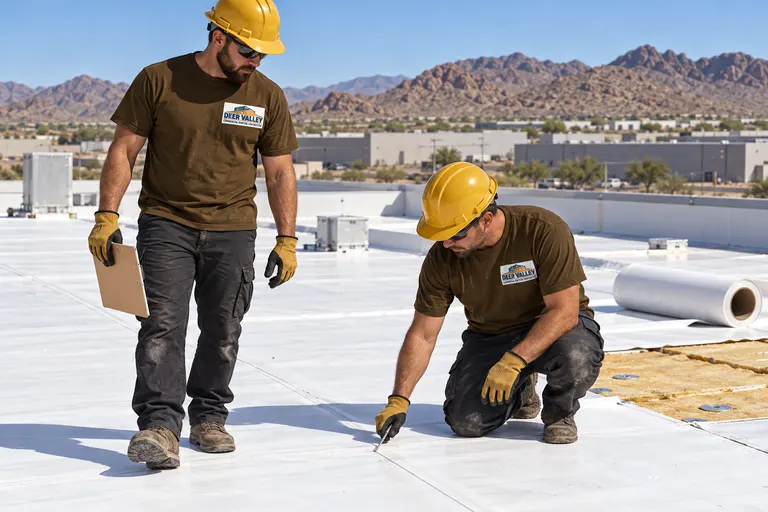
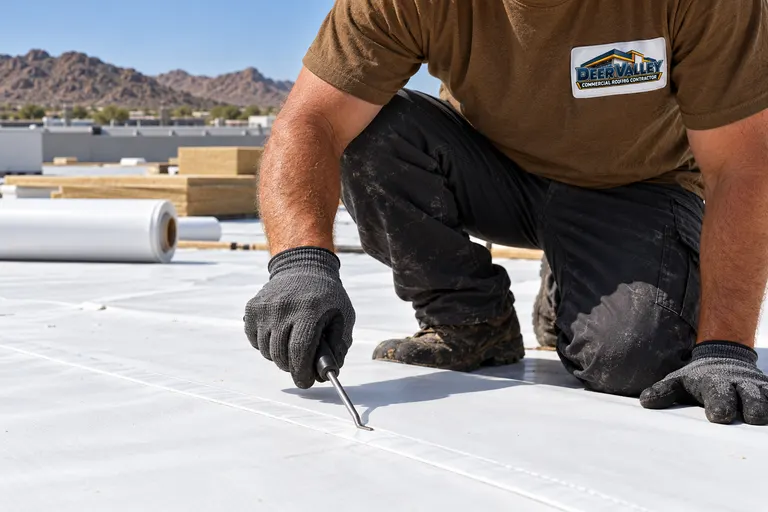
Two roofers on a light membrane roof, one kneeling to check a seam

Systems And Repairs

Deer Valley Commercial Roofing Services

Commercial roofing services for Deer Valley buildings: TPO and EPDM membranes, industrial roofs, and metal panels, installed new, repaired, or replaced after a roof walk.

  • Starts withA roof walk and cores
  • PathsRepair, recover, or replace
  • Work planOne section open at a time

Four Systems

Commercial Roofing Services Across Deer Valley

Each card lists the buildings a system suits and the roofs another system serves better.

Roofer running a seam probe along a fresh white TPO weld

TPO Roofing

Heat-welded white sheets for big low-slope decks over cooled offices, warehouses, and retail suites, with each lap probed after welding.

Best for

  • Wide flat decks
  • Buildings cooled all summer

Look elsewhere

  • Roofs with steep pitch
  • Decks left wet underneath
TPO roofing contractor in Deer Valley
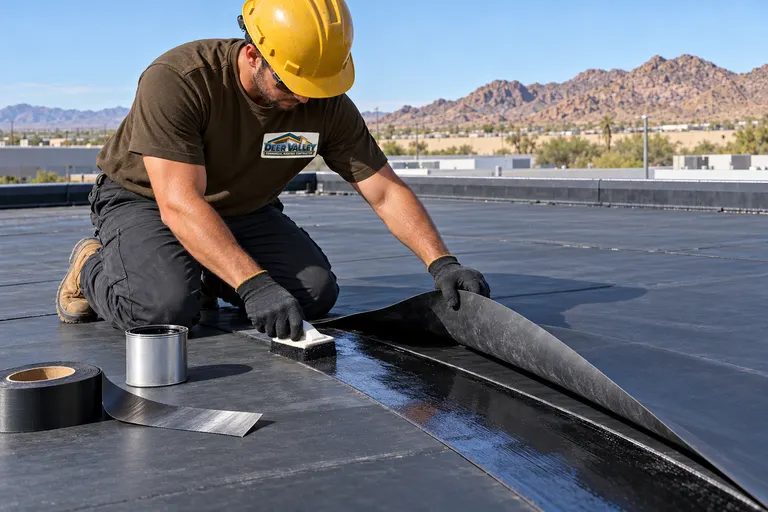
Roofer priming a black EPDM lap with a scrub pad before taping

EPDM Roofing

Black or white-on-black rubber for crowded roofs with vents, curbs, and odd corners, and for rebuilding one worn section of an existing rubber field.

Best for

  • Many penetrations
  • Partial rebuilds on rubber roofs

Look elsewhere

  • Daily cart traffic
  • Owners set on bare white
EPDM roofing contractor in Deer Valley
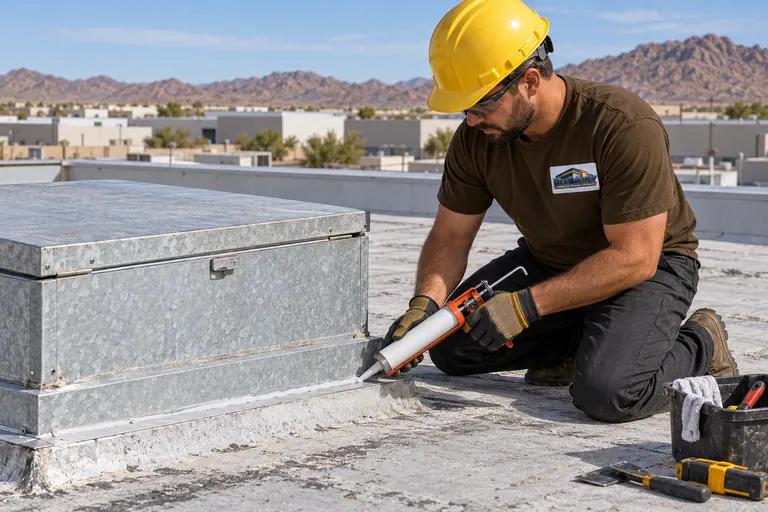
Roofer in a harness sealing the base of a roof hatch on an industrial building

Industrial Roofing

Long-span hangars, plants, and distribution buildings where hatches, process ducts, and equipment supports need flashing and phased work around production.

Best for

  • Hangars and plants
  • Roofs needing fall protection

Look elsewhere

  • Single small suites
  • Decorative sloped roofs
industrial roofing contractor in Deer Valley
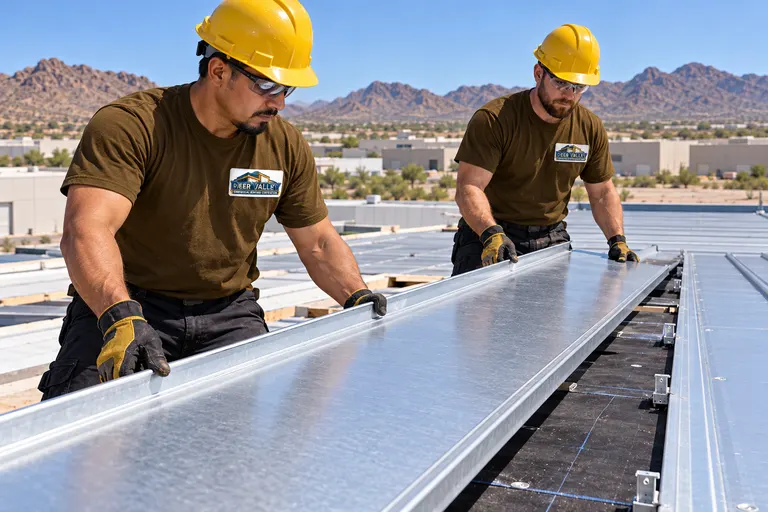
Two roofers setting a long standing-seam metal panel on a low-slope roof

Commercial Metal Roofing

Pre-engineered steel buildings with pitch get new standing-seam panels, through-fastened panel repairs, fastener swaps, and resealed laps.

Best for

  • Sloped steel shops
  • Bay-by-bay panel swaps

Look elsewhere

  • Dead-flat decks
  • Low spots that pond
commercial metal roofing contractor in Deer Valley

System Choice

Slope, Traffic, And Heat: Picking A System

Four roof traits narrow the choice before any material is priced: slope, foot traffic to units, the count of penetrations, and how much heat the building takes on.

SystemSlopeSeamsSurface and heatRooftop traffic
TPOLow slope with a clear path to drainsHot-air weldedWhite sheet reflects much of the sunWalk pads along unit paths
EPDMLow slope, irregular layoutsTaped or gluedBlack standard, white-on-black optionPads where technicians walk daily
Industrial assembliesWide spans on low slopeWelded or taped, reinforced at equipmentPicked per deck and exhaust loadHeavy, with protected service routes
MetalPitched roofs that shed waterStanding seam or lapped and fastenedPainted or reflective finish runs cooler than bare panelsPlanned routes over purlins
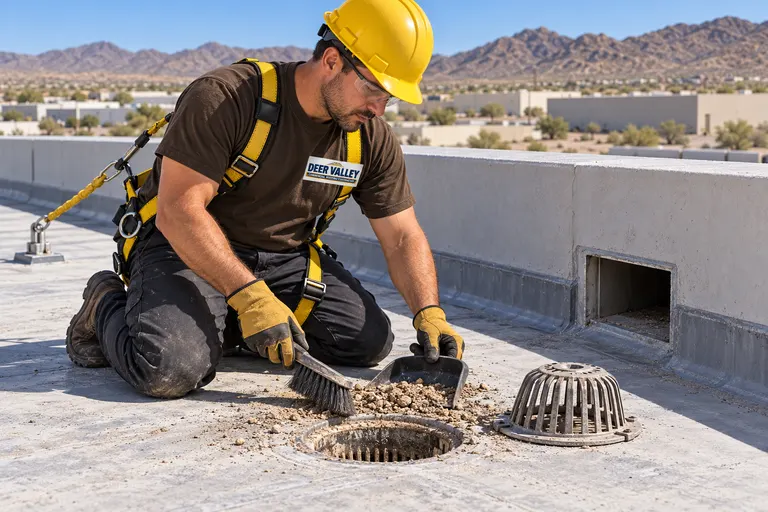
Roofer clearing dust and gravel from a roof drain beside an overflow scupper

Patches Failing Around Your Rooftop Units?

Curb flashing that opens up again every summer means the membrane around the unit needs rework. Have it checked before the next monsoon cell.

Work Sequence

How Each System Gets Installed

The order holds for TPO, EPDM, industrial, and metal work: inspect, decide, permit, build in sections, and check every seam before leaving.

  1. Inspect Your Roof

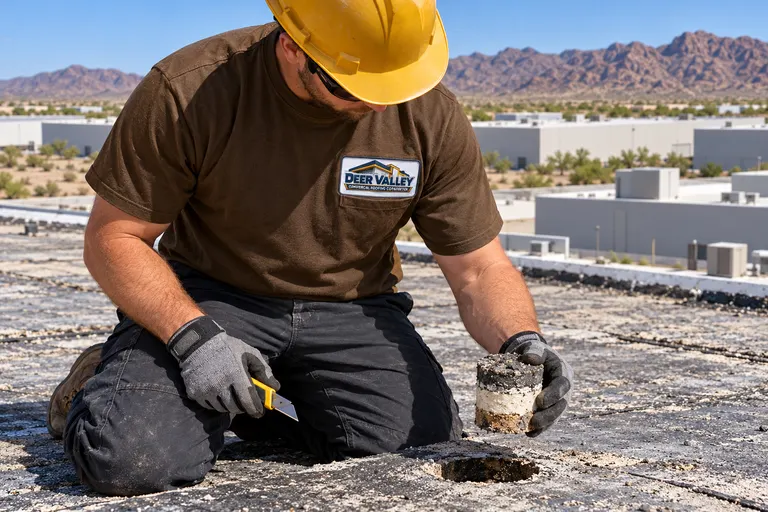
    Small cores and a moisture check show whether the insulation under the membrane or panels is dry enough to keep in place.

    Roofer holding a roof core sample that shows the layers of an older flat roof
  2. Match The System To The Deck

    Slope and deck type point to membrane or metal, and the core results decide between a repair, a recover, or a full tear-off.

  3. Set Up Access And Permits

    Material lifts, hoist spots, and dock clearance get planned with your facility team, and the reroof permit is filed with the right city or county office.

  4. Build Section By Section

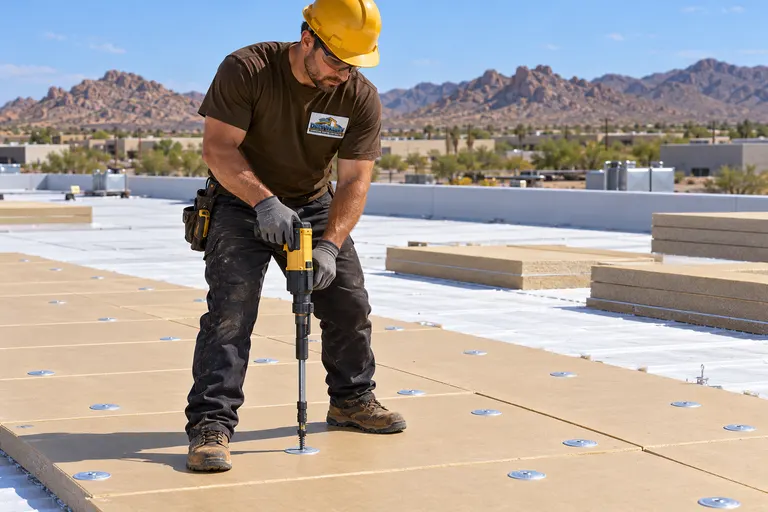
    New insulation goes down with plates and screws, then the membrane is welded or taped, or the panels are set and fastened, one bay at a time.

    Roofer fastening insulation boards with plates and a stand-up screw gun
  5. Probe, Clean, And Photograph

    Every lap is probed, cut scraps and loose screws leave the roof, and photos of the new details go into your building file.

System Questions

Picking Among Four Roof Systems

Which roof system fits my building type?

Start with slope and rooftop traffic. Flat warehouses and distribution centers lean toward TPO, offices and retail crowded with units work with TPO or EPDM, and pitched steel buildings take metal.

Hangars and plants can go any of the three ways depending on deck and process exhaust. An older roof needing a partial rebuild matches what is already there.

Is white TPO better than black EPDM in Phoenix heat?

For buildings that run air conditioning all summer, a white sheet keeps the roof surface cooler than black rubber. EPDM still wins on crowded or oddly shaped roofs, and a white-on-black EPDM sheet or reflective surfacing closes much of the heat gap.

Can you mix systems on one building?

Yes, when the roof has distinct areas. A pitched metal warehouse bay can sit beside a flat office section in TPO, as long as the transition is flashed where the two roofs meet.

How do you decide between repair and replacement?

Moisture in the insulation drives it. Leaks at one or two curbs over dry boards get repaired, while saturated insulation across large areas or brittle membrane everywhere moves the job to replacement.

Do metal roofs work on flat buildings?

Rarely. Metal panels need pitch to shed water, so a dead-flat deck is better served by TPO or EPDM. Some flat buildings get framing that adds slope before panels go on, which is a larger structural decision.

What maintenance does each system need?

Twice-yearly checks cover all four. TPO and EPDM need seam and flashing checks plus drain clearing, and metal roofs need fastener tightening and lap sealant touch-ups after the summer heat.

Price Out The Right System For Your Roof

Enter the roof size and condition for a ballpark range, or call to set up an inspection of the deck and layers.

Call Us (623) 310-0170