North Phoenix Commercial Roofing
Deer Valley Commercial Roofing Contractor
Your Deer Valley commercial roofing contractor for hangars, warehouses, flex buildings, and shopping centers. We install, repair, and replace TPO, EPDM, industrial, and metal roofs.
- First stepA roof walk and core check
- PermitsPhoenix or Maricopa County
- SystemsTPO, EPDM, industrial, metal
Roof Systems
Four Roof Systems We Install And Repair
Each system answers a different deck, slope, and rooftop load on the buildings around the airport and the I-17 corridor.
TPO Roofing
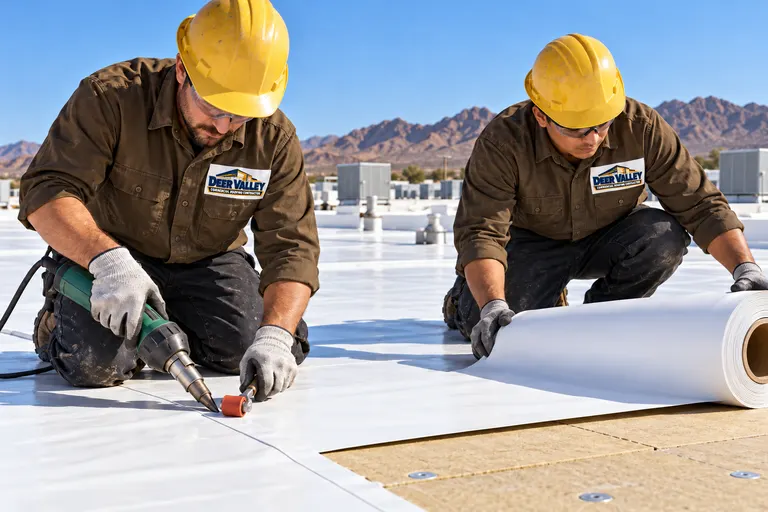
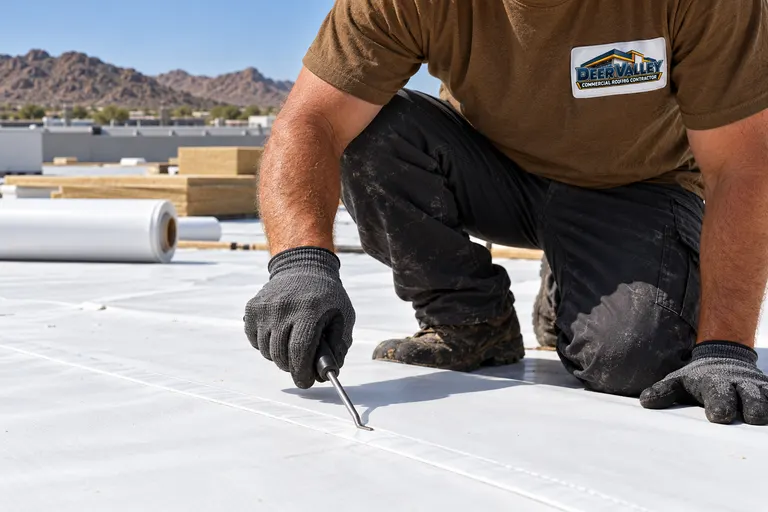
White single-ply sheets with hot-air welded laps, laid over new insulation on low-slope warehouses, offices, and retail centers that run air conditioning all summer.
TPO roofing in Deer ValleyBest for
- Flat warehouse and retail decks
- Roofs over cooled space
Look elsewhere
- Pitched steel buildings
- Wet insulation left in place
EPDM Roofing
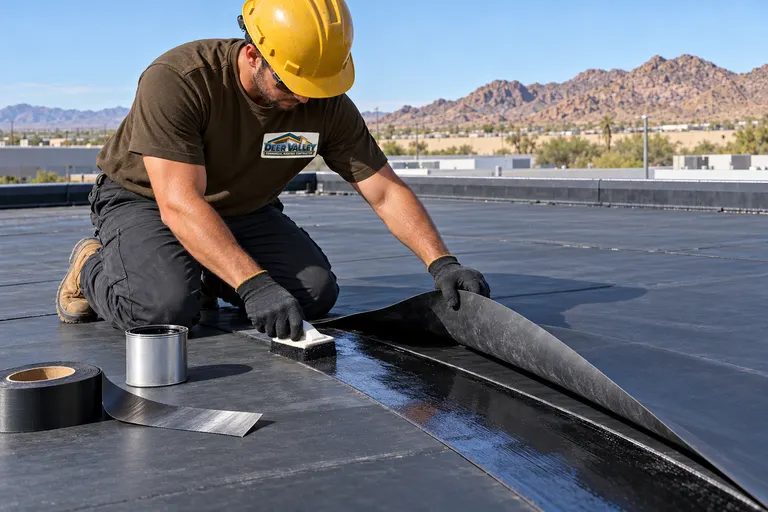
Rubber membrane that stays flexible through hot afternoons and cooler nights, detailed with taped seams around crowded vent stacks, curbs, and odd roof shapes.
EPDM roofing in Deer ValleyBest for
- Roofs with many penetrations
- Rebuilding part of an old rubber roof
Look elsewhere
- Owners set on a bare white sheet
- Heavy traffic with no walk pads
Industrial Roofing
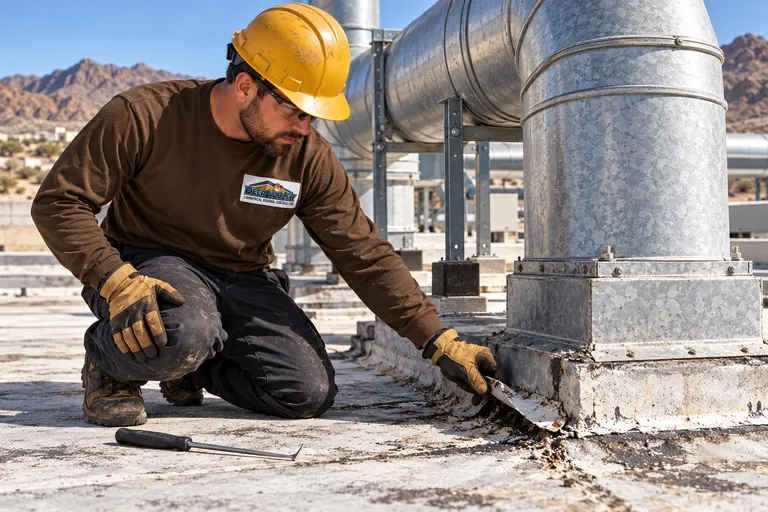
Hangars, plants, and distribution roofs with wide spans, process ducts, and heavy rooftop units, roofed one section at a time so doors and docks stay in use.
industrial roofing in Deer ValleyBest for
- Hangars and plants near the airport
- Roofs with exhaust and process penetrations
Look elsewhere
- Small single-tenant suites
- Steep architectural roofs
Commercial Metal Roofing
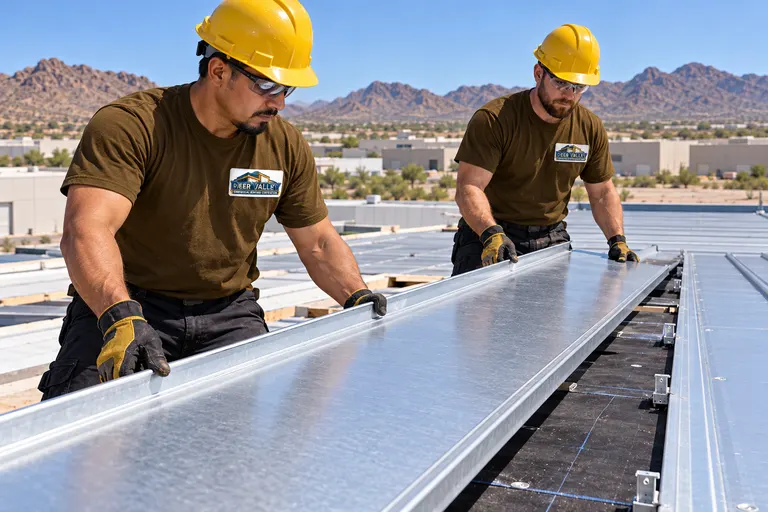
Standing-seam and through-fastened panels on pre-engineered steel buildings with enough pitch to shed monsoon rain, plus fastener, lap, and panel repairs.
commercial metal roofing in Deer ValleyBest for
- Steel shops and warehouses with slope
- Replacing panels bay by bay
Look elsewhere
- Dead-flat roofs
- Decks that hold standing water
Building Fit
Building Types And The Roofs They Need
Slope, rooftop traffic, and penetrations set the starting point. The roof walk confirms it once the deck and the existing layers are known.
| Building | Usual fit | What we watch for |
|---|---|---|
| Hangar or aviation shop | TPO, EPDM, or metal | Door headers, roof hatches, and the drain line along the long wall |
| Distribution warehouse | TPO | Drain capacity across wide bays and the walking path to rooftop units |
| Office or retail with many units | TPO or EPDM | Curb flashing, pitch pans, and condensate lines at each unit |
| Pre-engineered steel building with pitch | Metal | Backed-out fasteners, dried lap sealant, and rust at cut edges |
| Older roof that needs a partial rebuild | Match the existing system | The tie-in where new material meets the old field sheet |
How The Work Runs
From First Roof Walk To Final Walk
Every job starts on the roof with a look at the deck, the layers, and the drains. This is the order the work follows on a Deer Valley building.
Inspect Your Roof
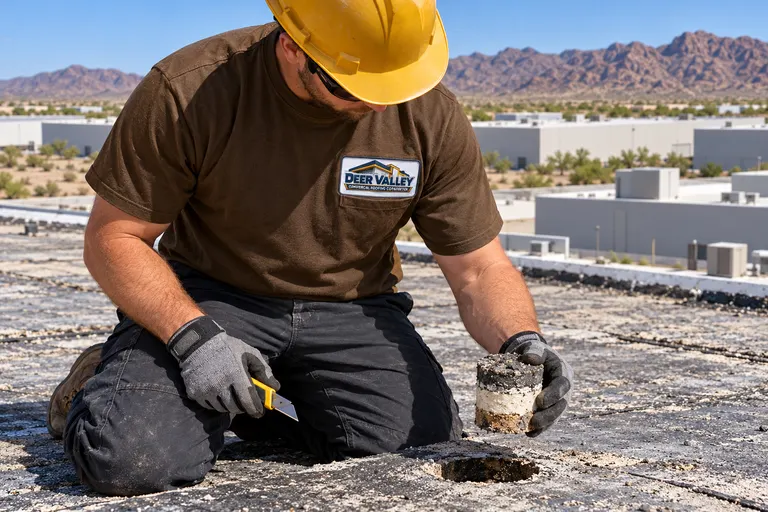
A roofer walks the whole roof, cuts small cores where the membrane feels soft, and photographs every curb, drain, and seam that needs attention.
Choose Repair, Recover, Or Replace
Findings set the path. Dry insulation with a few open seams points to repair, while wide areas of wet boards or two existing roof layers point to a tear-off.
Confirm The Permit Office
Deer Valley addresses go through City of Phoenix Planning & Development, and county parcels farther north go through Maricopa County, so the office is settled before roof material is ordered.
Roof One Section At A Time
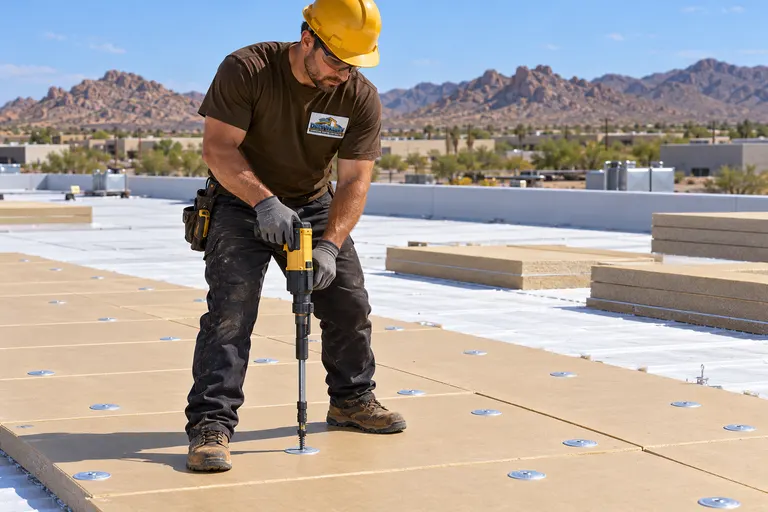
Crews open only as much roof as they can dry in before quitting time, fasten new insulation, and weld or tape the membrane before moving to the next bay.
Walk It Again
Before the crew leaves, every new seam is probed, drains are cleared, and the roof is photographed again so your building file shows what changed.
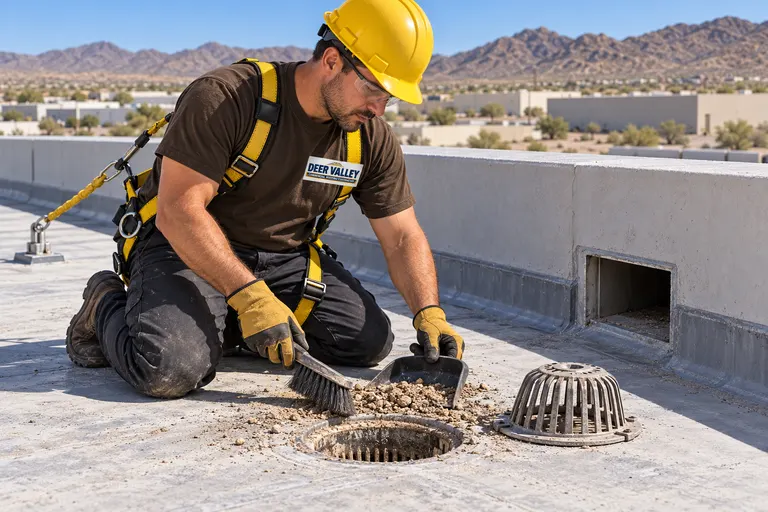
Dust Packed In Your Roof Drains?
Phoenix monsoon season runs June 15 to September 30. A drain and seam check in late spring clears the outlets before the first big storm cell rolls through.
Trouble Spots
Where Deer Valley Roofs Start To Leak
This plan of a typical flex-industrial roof marks the six places we check first. Each number matches the list beside it.
Clogged Roof Drains
Desert dust and fine gravel settle in the strainer, and one blocked drain can hold water across thousands of square feet after a storm.
Rooftop Unit Curbs
Flashing shrinks in the heat and pulls back from the curb wall, which lets wind-driven rain run under the membrane and onto the deck.
Open Seams
Daily heating and cooling works the laps loose, starting where foot traffic crosses the roof on the way to the units.
Parapet Flashing
Termination bars and sealant along the parapet wall turn brittle and crack, so water gets behind the flashing instead of running over it.
Membrane Blisters
Moisture trapped under the membrane expands in the sun and lifts a bubble that tears open under a boot heel.
Pipe Penetrations
Pitch pans and pipe boots at vents and gas lines dry out first, often years before the field membrane wears through.
What Changes
Before And After A New Roof
These are the conditions owners describe before the work starts, and what the roof looks like once it is rebuilt or replaced.
Before The New Roof
Stains after storms
Ceiling tiles mark up under curbs and drains after each monsoon cell.
Water left standing
Low spots hold rings of dust days after the rain stops.
Patch on patch
Layers of mastic around units that crack again every summer.
Spongy areas near drains
Wet insulation that gives when you walk across it.
After The New Roof
Welded or taped laps
New seams checked along their full length before the crew leaves.
Dry insulation
Wet boards cut out and replaced so the deck below stays dry.
Fresh flashing
Curbs, pipes, and parapets wrapped in new membrane flashing.
Open outlets
Drains and scuppers cleared, with strainers reset at every outlet.
Service Areas
Where We Work Around Deer Valley
Six areas north, east, and south of the airport, placed on a site-plan grid. Each cell reference matches the list.
- C1
Anthem
County permits east of I-17 and Phoenix permits in Parkside to the west, so the parcel decides who permits the reroof.
- D1
New River
Storm checks on exposed rural sites after monsoon cells, looking for lifted edges, punctures, and debris in drains.
- D2
Desert Hills
Spring and fall roof checks timed around the monsoon, with summer work started early in the morning.
- C3
North Gateway
Newer employment-center roofs along I-17, where added equipment screens get checked against the North Black Canyon Overlay.
- E3
Desert View
Retail and office campuses near Loop 101 and Desert Ridge, with several roofs on one property inspected together.
- C5
North Mountain
Established two-story offices and retail south of Deer Valley, where parapet flashing and coping joints come first.
Owner Questions
Questions For A Deer Valley Commercial Roofing Contractor
How does Phoenix heat wear out a commercial roof?
Mostly through UV and daily movement. Long summers bake the sealant at pitch pans and metal laps until it cracks, shrink flashing away from curbs and parapets, and push trapped moisture into blisters. Older EPDM and TPO near the end of its life also wears thin on the surface.
Can a leaking flat roof be repaired instead of replaced?
Often, yes. When the leaks trace to a few curbs, drains, or seams and the insulation is dry, repairs make sense. Cores tell us whether the boards are wet, and wide areas of saturated insulation shift the answer toward replacement.
Do you roof hangars near Deer Valley Airport?
Yes. Hangars and aviation service buildings are part of the industrial work we do. Wide spans, roof hatches, and door headers get extra attention, and the work is phased so hangar doors stay usable while each section is open.
How long does a commercial reroof take?
It comes down to roof size, the number of curbs and penetrations, how much wet insulation comes out, and summer heat limits on working hours. The schedule is written after the inspection, section by section, so you know which part of the building is affected each day.
Will our rooftop units need to be shut down?
Only the units inside the section being worked. Curb flashing needs the unit off and sometimes lifted, so each shutdown is planned with your facility team ahead of time, one section at a time.
Can new TPO go over the existing roof?
Sometimes. A recover works when the existing roof is dry and only one layer is in place. Two existing layers, or wet boards found in the cores, point to a tear-off, and the City of Phoenix reroof application asks which one you are doing.
Get A Price On Your Deer Valley Roof
Tell us the roof size and condition for a ballpark figure, or call to set up a roof walk with a commercial roofer.