New River commercial roofing contractor for metal and flat roofs on exposed rural sites. After a monsoon cell, we check edges, panels, and drains for storm damage.
The City of Phoenix lists monsoon season as June 15 to September 30, with storms peaking from mid-July to mid-August. Gusts, blowing dust, and short bursts of heavy rain hit hardest on open ground, and many New River buildings stand alone on larger lots with little shelter around them.
After a major storm we walk the roof, mark damage in chalk, and photograph each spot so you have a record before any repair starts.
Lifted edge trim and loose panel fasteners
Punctures and torn laps from blown debris
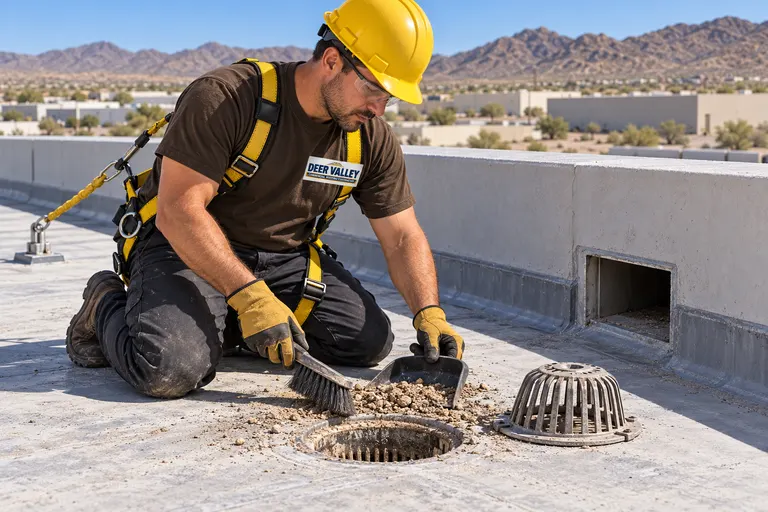
Drains and gutters packed with dust
Permits through Maricopa County Planning & Development
Metal Roof Plan
Where Storms Hit A Metal Building
Open sites take wind from every side. This plan of a metal building marks the five spots we check after a storm.
1
Eave And Rake Trim
Gusts get under loose trim at the eave and rake, and once one piece lifts, the next storm can peel back the panel edge behind it.
2
Backed-Out Fasteners
Screws that loosened in the summer heat let panels rattle in the wind, and the washers stop sealing once they shift.
3
Side Laps
Wind-driven rain pushes sideways through laps whose sealant has dried, which is why some leaks show up only during storms.
4
Gutters And Outlets
Dust and debris washed off the roof pack the gutter, and an overflowing gutter sends water back under the eave trim.
5
Ridge Cap
Ridge caps sit highest and catch the strongest gusts, so closures and fasteners along the ridge get a close look on every storm check.
What Changes
Roof Gains For New River Buildings
Storm damage on a rural roof grows with each monsoon cell if nobody catches it. This is the change a check and repair after each storm make.
Before The New Roof
Trim lifting at corners
Edge pieces bent up after strong gusts.
Loose screws
Fasteners backed out and washers no longer seated.
Packed gutters
Dust and grit holding water at the eave.
Hidden punctures
Holes from blown debris found only when a ceiling stains.
After The New Roof
Secured trim
Eave and rake pieces refastened or replaced along their length.
Tight fasteners
Loose screws replaced with new ones and fresh washers.
Clear gutters
Gutters and outlets flushed of dust and debris.
Recorded repairs
Each patched spot photographed with its chalk mark and location.
Systems
Roof Systems For New River Properties
Buildings on larger New River lots often carry metal roofs, and offices or shops may have flat roofs.
Commercial Metal Roofing
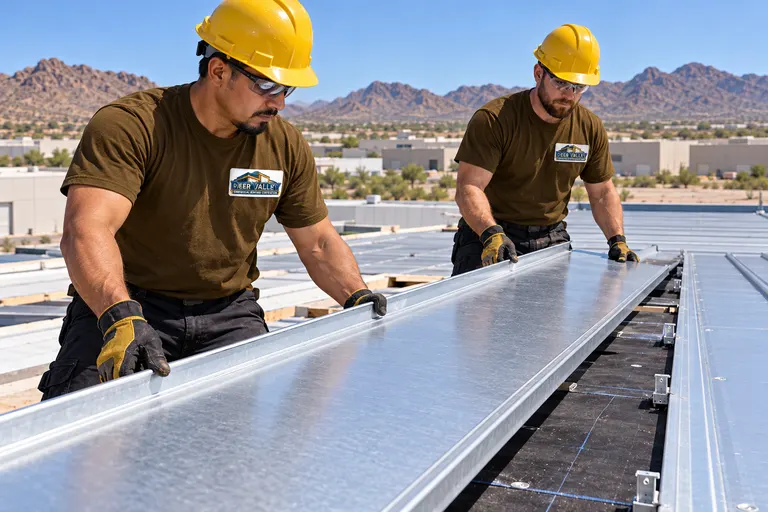
Panels on steel buildings out in the open get fastener, lap, and trim repairs after storms, or new panels bay by bay where damage runs deep.
A storm check on an exposed New River building follows the same order every time, so nothing on the roof gets skipped.
1
Inspect Your Roof
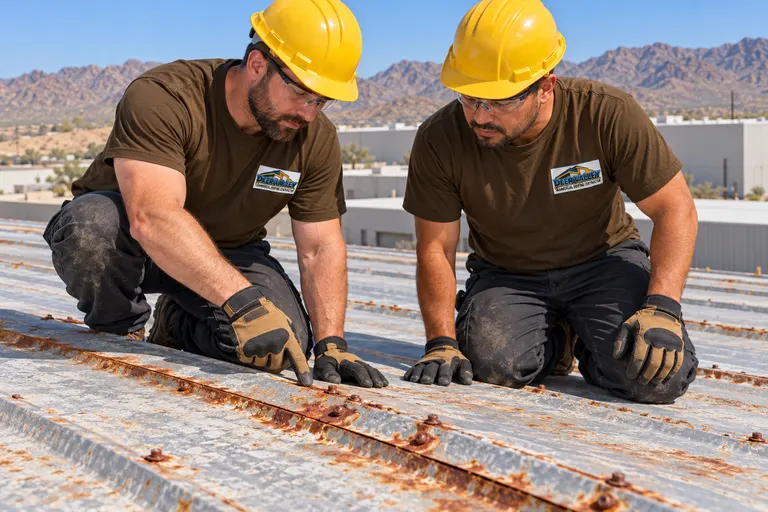
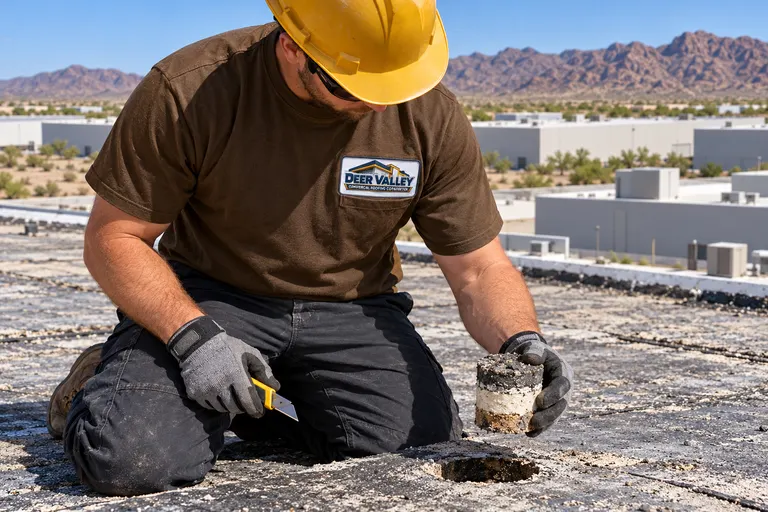
A roofer walks every panel run and the full perimeter, cuts a core where water may have reached the insulation, and checks the ceiling below each suspect spot.
2
Mark And Photograph
Each damaged spot on the roof is circled in chalk, numbered, and photographed in place, so the record shows the damage before anything is touched.
3
Close The Openings
When the NWS Phoenix forecast office posts storm warnings, open punctures and torn laps get a temporary seal first so the next cell finds them closed.
4
Repair The Perimeter
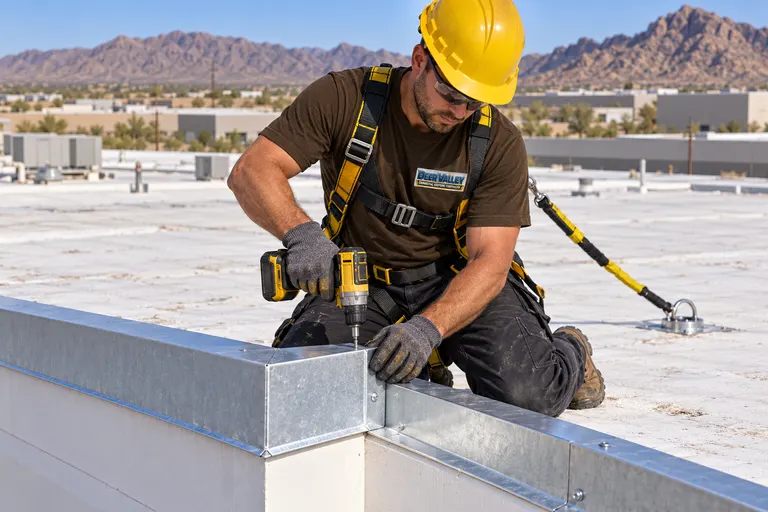
Lifted trim is refastened or replaced, loose screws are swapped for new ones with fresh washers, and the ridge cap is secured end to end.
5
Clear The Water Path
Gutters and outlets are flushed, debris comes off the roof, and the last photos are matched to the chalk marks from the first visit.
Storm Questions For A New River Commercial Roofing Contractor
What should New River owners expect from monsoon season?
The City of Phoenix lists the monsoon as June 15 to September 30, with storms peaking from mid-July to mid-August. Expect strong gusts, blowing dust, and short bursts of heavy rain.
On low-slope roofs the biggest risks are wind lifting loose edges and debris blocking drains so water ponds, and the city advises clearing drains and scuppers before storms. A pre-season check in late spring and a quick look after any major storm cover both.
Should I call after every storm?
Call after any storm strong enough to move debris, bend trim, or send water through a ceiling. Smaller storms can wait for the fall inspection, when the whole roof gets checked and the gutters are cleaned once the monsoon ends.
Do you document roof damage for insurance?
Every damaged spot is chalked, numbered, and photographed before repairs begin, and the photos are kept with a list of what was found. Owners often pass that record to their insurer, and the claim itself stays between you and the carrier.
Can a metal roof be repaired after wind damage?
Most wind damage on metal is repairable. Lifted trim gets refastened or replaced, loose screws are swapped, and a bent panel is cut out and replaced in its bay. Full replacement comes up only when rust or damage runs across many bays.
What does hail do to a roof out here?
Hail leaves bruises on membrane and dents on metal panels. After a hail event the roof gets the same chalk-and-photo check, with cores taken where a membrane bruise sits over insulation that feels soft, and the findings go into your building file.
Who issues building permits in New River?
New River is unincorporated, so Maricopa County Planning & Development handles building and reroof permits. The county takes applications online through its Permit Center, and requirements change, so the current rules are confirmed before each project.
Why do my gutters overflow during storms?
Dust and grit washed off the roof settle in the gutter between storms, and the first heavy burst carries more debris down. Once the outlet clogs, water spills back under the eave trim and stains the wall below.
Can storm repairs wait until monsoon season ends?
Temporary seals cannot wait, since open punctures take on water with every cell. Permanent repairs to trim and panels are often scheduled for cooler fall weather, when crews can work longer hours and the full roof gets inspected on the same visit.
Book A New River Storm Check
Send the roof size and condition for a ballpark figure, or call after the storm passes to set up a roof check.