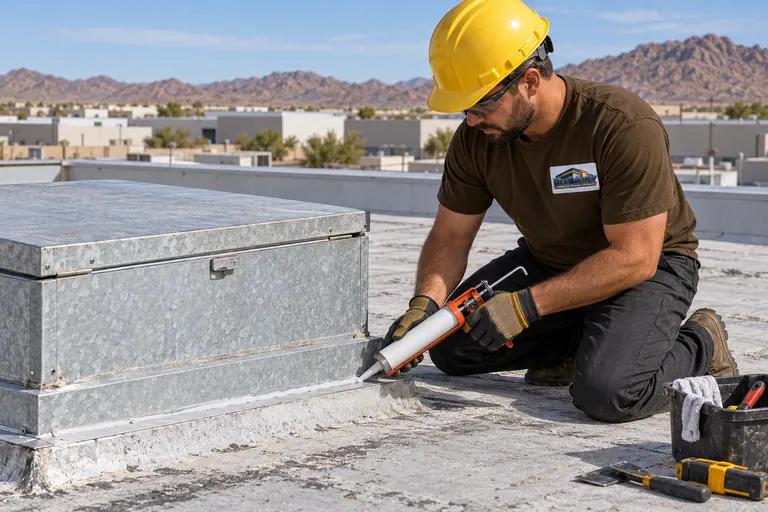
Industrial Roofing
Large plants and hangars with metal and membrane sections get phased industrial work, with walk pads and drain checks across each bay.
industrial roofing in Deer Valley
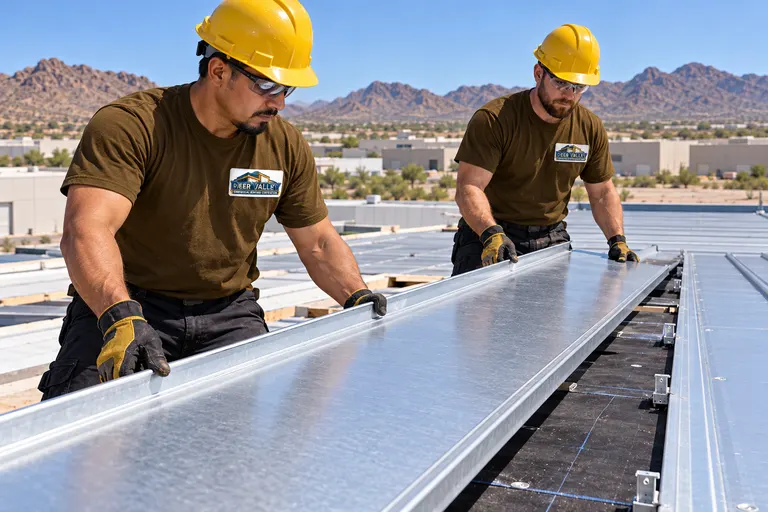
Standing Seam And Panel Roofs
Your Deer Valley commercial metal roofing contractor for steel warehouses, shops, and retail canopies. We install new panels, fix fasteners and laps, and replace rusted bays.
Fit Check
Metal needs enough slope to shed water. The second column lists the roofs where a membrane system does the job better.
Metal Trouble Spots
This plan of a pre-engineered steel roof marks the six spots where daily heat movement opens up a panel roof.
Panels grow and shrink with the sun every day, and that movement walks screws loose until the washer no longer seals the hole.
Sealant at the panel laps dries out in the heat, and wind-driven rain then wicks along the lap and drips off the purlin below.
Closures and sealant under the ridge cap shrink or fall out, leaving gaps where blowing rain and dust get in at the top of each panel.
Rust starts at cut panel edges and old laps, then spreads under the paint until the steel thins through.
Curbs set into a ribbed roof need custom flashing that follows the panel profile, and quick sealant fixes there reopen within a season.
Water off a long panel run hits the eave hard, so loose eave trim and clogged gutters push water back under the panel ends.
Metal Options
Most metal roofs need fastener and lap work long before the panels wear out. These four options run from a tune-up to new panels.
| Option | When it fits | What the work involves |
|---|---|---|
| Fastener and lap repair | Leaks at screws, laps, or ridge cap on otherwise solid panels | New fasteners and washers, laps resealed with butyl tape, new closures and ridge sealant |
| Panel replacement in sections | Rust-through limited to certain bays | Removing rusted panels and setting new ones matched to the existing profile |
| Full tear-off and replace | Rusted-through panels in many bays | Removing the old roof by section and installing new standing-seam or through-fastened panels |
| Standing-seam upgrade | Through-fastened roofs with repeated fastener leaks | Concealed-clip standing-seam panels that let the metal move without working screws loose |
What Changes
These are the conditions owners notice on a tired metal roof, and how the roof reads after fastener, lap, or panel work.
Drips at screw lines
Water tracking down from fasteners in rows.
Rust at the laps
Orange streaks spreading from panel overlaps.
Rattling ridge cap
Loose trim and missing closures at the ridge.
Stained purlins
Rust and water marks inside along each lap.
Fresh fasteners
New screws and washers seated snug against the panel.
Sealed laps
Butyl tape and sealant renewed along side and end laps.
Tight trim
Ridge cap, eave, and closures fastened and sealed.
Painted panel surface
A painted or reflective finish that runs cooler than bare metal.
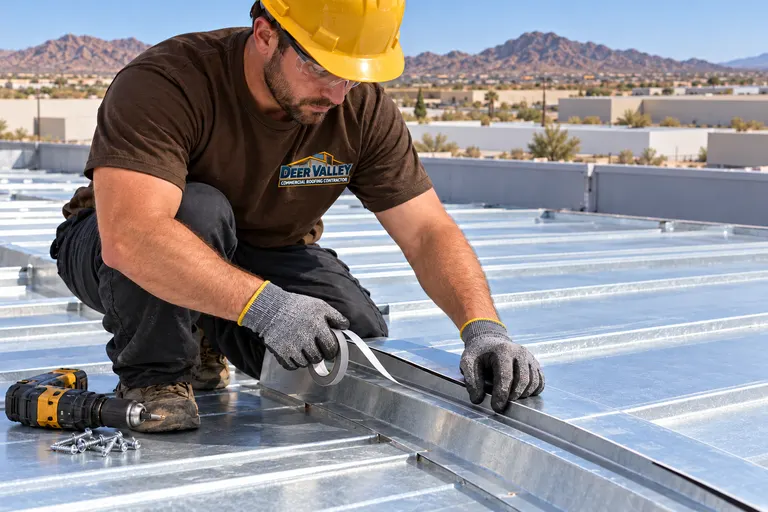
Rust at laps and cut edges spreads faster once water gets under the paint. A panel walk finds which bays need fasteners and sealant and which need new metal.
Metal Job Sequence
Panel roofs get worked lap by lap and bay by bay, starting with the fasteners and sealant that heat movement loosens first.
A roofer walks the panel runs, tests fasteners by hand, checks clips and laps, and marks every rusted bay on a roof plan with photos.
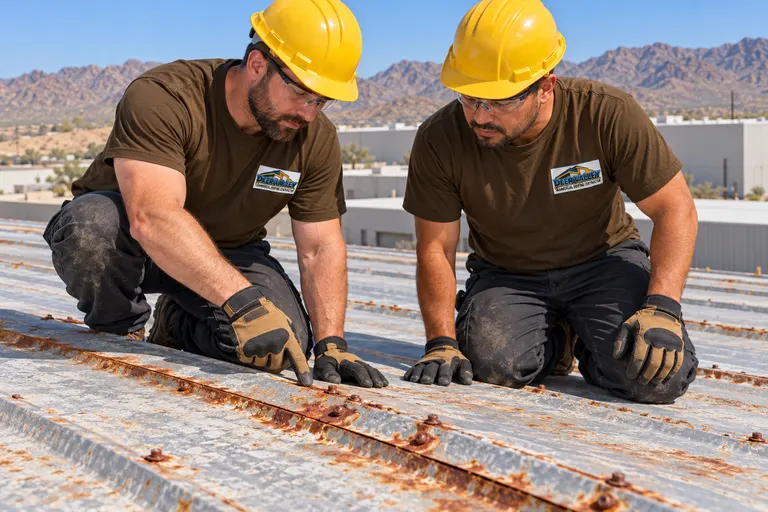
Panels with loose screws and dry sealant get repair work, while panels rusted through are set aside for replacement in that section only.
Backed-out screws are replaced with new fasteners and washers, and side laps are opened, cleaned, and resealed with butyl tape before refastening.
New panels matched to the existing profile go in bay by bay, with edge metal, closures, and ridge cap secured as each bay closes.
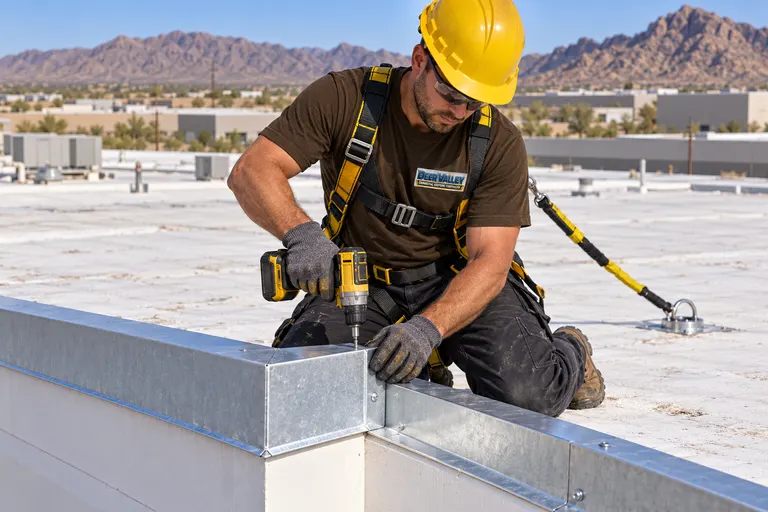
Curbs and pipes get flashing shaped to the panel ribs, gutters are cleared, and a final walk with photos records the work for your file.
Related Systems
Many steel buildings near the airport mix pitched panels with flat sections or large plant roofs. These two systems cover those parts.
Large plants and hangars with metal and membrane sections get phased industrial work, with walk pads and drain checks across each bay.
industrial roofing in Deer Valley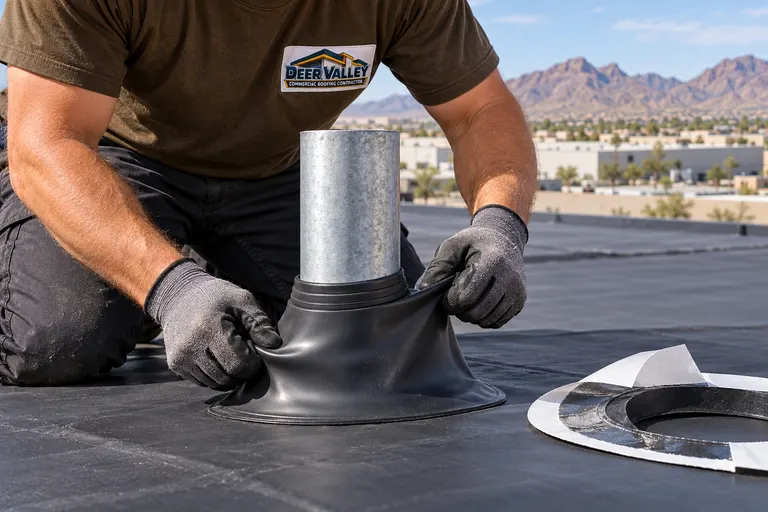
Flat additions and low sections tied into a metal building take rubber membrane well, especially where pipes and vents crowd the roof.
EPDM roofing in Deer ValleyMetal Roof Questions
When the building has enough slope to shed water, such as pre-engineered steel warehouses, shops, and some retail canopies. Standing-seam and through-fastened panels are both common here.
Daily heat loosens fasteners, lap sealant, and clips, so those get checked on every visit. A painted or reflective finish runs cooler than bare metal. On a dead-flat roof, TPO or EPDM performs better.
Heat movement. Panels expand in the afternoon sun and contract at night, and that cycle works through-fastened screws loose over time. Once a washer lifts, rain runs down the screw shank into the building. Replacing fasteners with new washers is the most common metal roof repair we do.
Yes, when the rust is limited to certain bays. New panels matched to the existing profile go in where the old ones rusted through, and the rest of the roof gets fastener and lap work. Rust-through across many bays points to full replacement.
On roofs with repeated screw leaks, it often is. Standing-seam panels attach with concealed clips that let the metal move, so there are far fewer exposed fasteners to work loose. Through-fastened panels cost less up front and suit simpler shop buildings.
Forty years or more in many cases, with steady maintenance. Loose fasteners, failed sealant, and corrosion at cut edges are what shorten it around Deer Valley, so a spring and fall check of screws and laps keeps those problems small.
Metal panels need slope to shed water, so a dead-flat roof gets TPO or EPDM instead. Where a flat section joins a pitched steel building, we tie the two systems together at the transition with flashing shaped to the panel ribs.
Most commercial reroofing does. Deer Valley falls under City of Phoenix Planning & Development, while county parcels go through Maricopa County. Panel replacement work is confirmed with the right office before any material is ordered.
Send the roof size and condition for a ballpark number on your metal roof, or call to set up a panel and fastener walk.
Leave a name and number and we will call you back. Or call now: (623) 310-0170