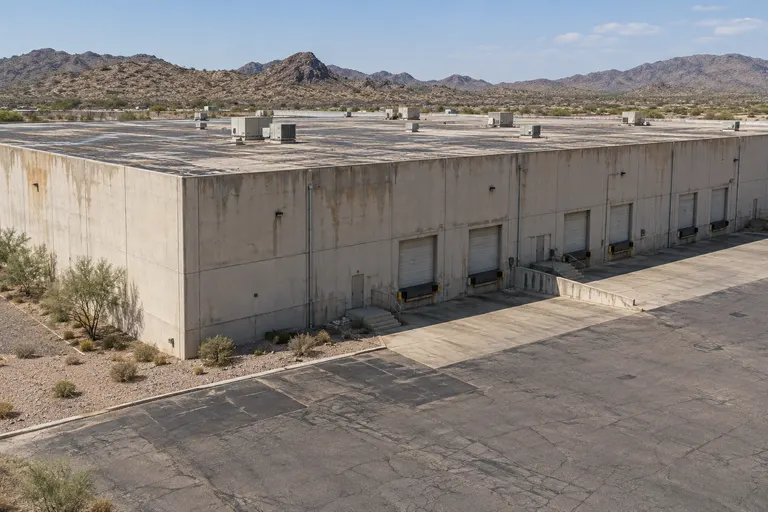
North Gateway commercial roofing contractor for newer offices, flex space, and warehouses along I-17. We install TPO and industrial roofs and flash new rooftop equipment.
North Gateway is the northern gateway into Phoenix, planned as a regional employment center with emerging retail. Its zoning page lists the North Black Canyon Overlay District plus the Carefree Highway and Cave Creek Road scenic corridors.
Those rules mostly cover land use and building height, so a like-for-like reroof is rarely affected. Work that adds height, such as a new equipment screen or a taller curb, gets checked against the overlay before anything is ordered.
Screen posts flashed into the membrane at each base
New curbs flashed with membrane welded at the corners
Overlay check on any added height
Permits through City of Phoenix Planning & Development
Equipment Roof Plan
Five Places Added Equipment Leaks
Newer roofs in North Gateway leak where something was added after the original install. This plan marks the five spots we check.
1
Screen Post Bases
Each post that holds an equipment screen passes through the membrane, and a post sealed with caulk alone opens up after a few summers of movement.
2
Added Unit Curbs
Tenants who add cooling often set new units on curbs cut in later, and the flashing at those corners is where water first reaches the deck.
3
New Conduit And Gas Lines
Lines run across the roof to new equipment need supports and sealed penetrations, or they rub through the membrane lying under them.
4
Service Paths
Technicians walking to added units wear a strip across the field sheet, so walk pads go down along the path they actually use.
5
Drains Near Equipment
Condensate lines from new units drip toward the nearest drain, and that steady water turns blown dust into mud inside the strainer.
What Changes
Roof Gains For North Gateway Buildings
Newer roofs here hold up well until the equipment changes. These are the conditions before and after that work is done with roofing details.
Before The New Roof
Caulked screen posts
Posts set through the roof with a bead of sealant around them.
Patched-in curbs
New units on curbs flashed with mastic and tape.
Worn paths
Scuffed membrane between the hatch and the units.
Lines on the sheet
Conduit and gas pipe lying directly on the membrane.
After The New Roof
Flashed post bases
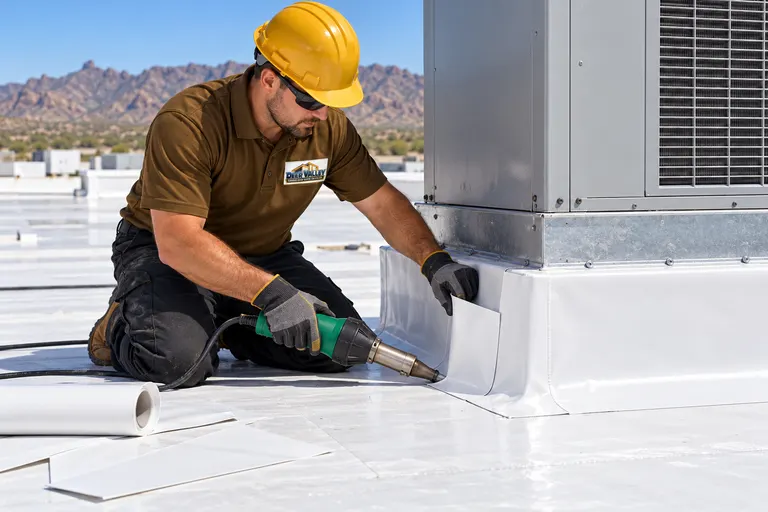
Each screen post wrapped with a membrane boot welded to the field.
Welded curb flashing
Curbs wrapped with new membrane and welded at the corners.
Walk pads
Protective pads laid along the path technicians use.
Supported lines
Conduit and pipe raised on supports with flashed penetrations.
Systems
Roof Systems For North Gateway Properties
Newer flex and warehouse roofs here are mostly flat, with equipment added as tenants change.
TPO Roofing
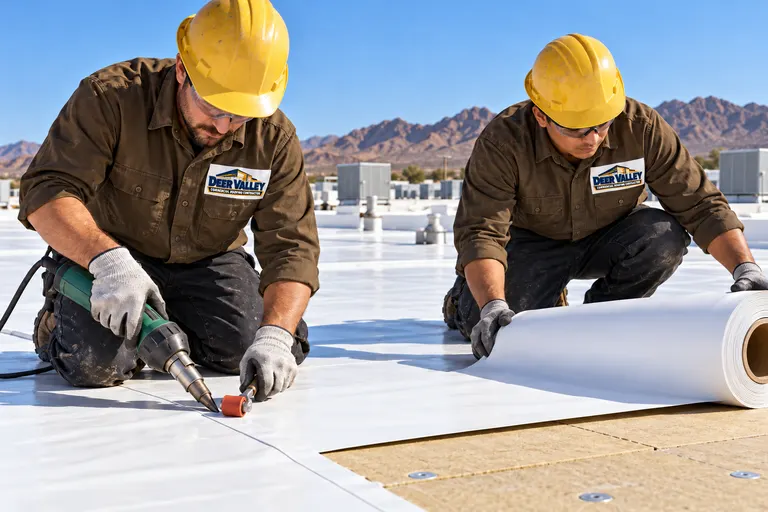
Heat-welded boots and curb wraps match the white TPO already on many newer buildings, so added equipment gets welded in where it would otherwise be caulked.
Equipment additions touch the roof in several places at once. This is the order we follow on a North Gateway building.
1
Inspect Your Roof
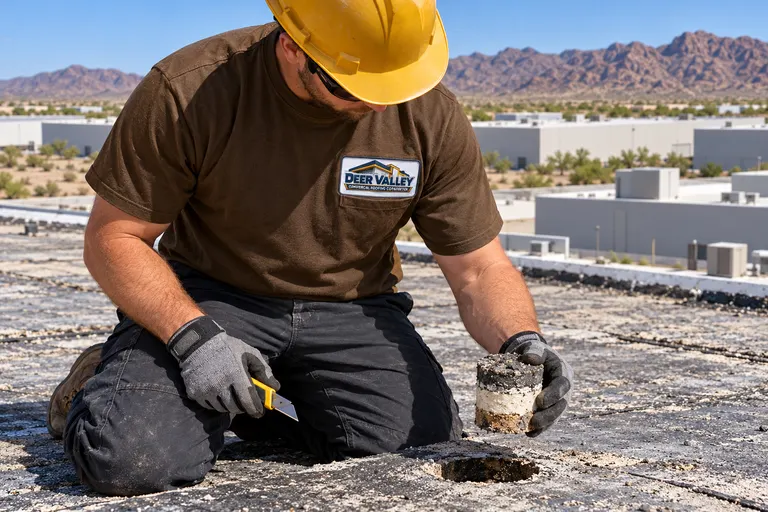
We walk the existing membrane around every unit and post, cut a core near the work area, and confirm the roof under the new equipment is dry.
2
Check The Overlay
Any new screen or taller curb is measured against the North Black Canyon Overlay and the scenic corridor rules before the permit application goes to the city.
3
Set Curbs And Posts
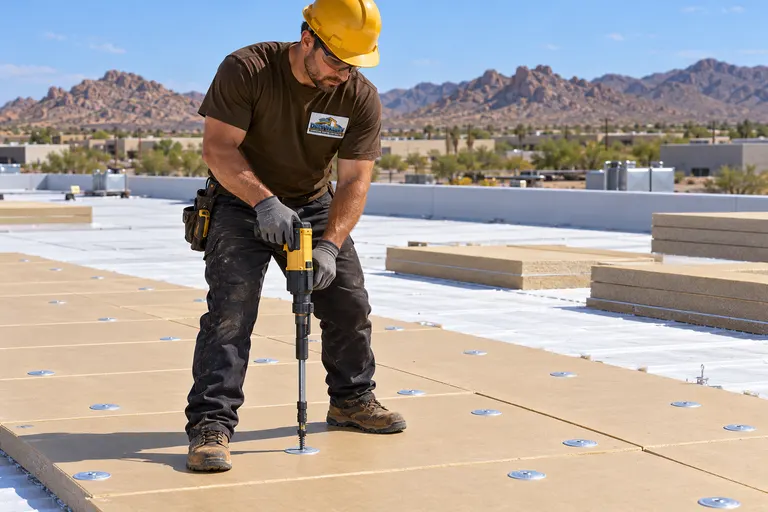
Curbs and screen posts are set on the deck, and new insulation is cut tight around each one so the membrane has a flat surface to weld to.
4
Weld The Flashing
Membrane boots go over every post and wraps go around every curb, with hot-air welds checked by probe along their full length.
5
Protect The Path
Walk pads are laid from the hatch to each unit, lines are lifted onto supports, and photos of each roof detail go into your building file.
What Owners Ask A North Gateway Commercial Roofing Contractor
Do overlay rules affect a North Gateway reroof?
For most parcels, the answer is no. The North Black Canyon Overlay and the scenic corridors along Carefree Highway and Cave Creek Road mostly govern land use and building height, so a like-for-like reroof is rarely affected. Work that adds height, such as new equipment screens, is worth checking against the overlay first.
Can new equipment go on a roof that still has its original membrane?
Yes, as long as the membrane is dry and the curb or post is flashed with matching material. Welding TPO boots to an existing TPO roof makes the new detail as strong as the rest of the sheet around it.
Who flashes a new curb, the roofer or the mechanical contractor?
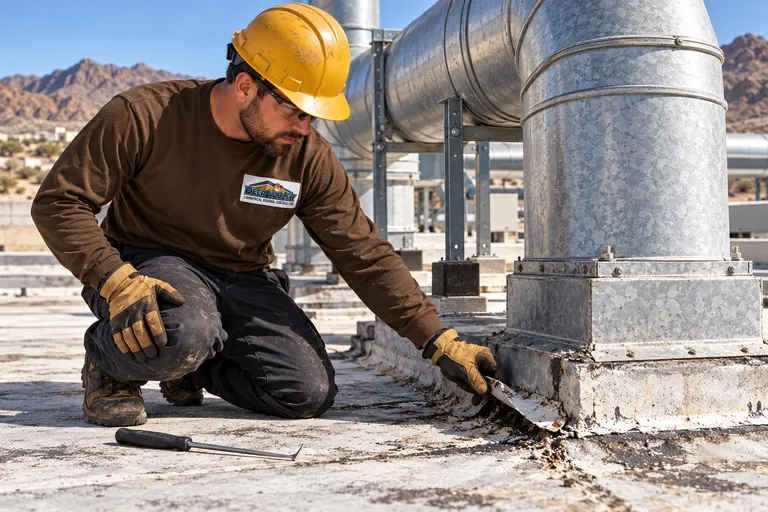
Both have a part. The mechanical contractor sets the unit, and the roofer flashes the curb into the membrane. When the roofing side is skipped, the corners usually get mastic, and that is where most added-equipment leaks start on a newer roof.
How are equipment screen posts flashed?
Each round post gets a pre-formed membrane boot welded to the field sheet, with a clamp at the top. Square or odd-shaped posts get a field-wrapped flashing instead, since a sealant-filled pan dries and cracks in the summer heat.
Who issues roofing permits in North Gateway?
City of Phoenix Planning & Development, as for the other Phoenix villages. Nonresidential work goes through its commercial plan review and permits office, and the reroof application asks whether the job is a tear-off or a recover.
Do walk pads matter on a newer roof?
They do once technicians start visiting added units every season. Boots and tools scuff the same strip of membrane on each visit, and a worn path near a curb or drain is a common leak point. Pads spread that traffic out and cost little to replace.
How long does a TPO roof last here?
About 20 to 30 years, with UV exposure, foot traffic, and poorly welded seams as the main things that shorten it. Regular inspections and quick repairs push a roof toward the upper end of that range.
Plan Your North Gateway Roof Work
Send the roof size and condition for a ballpark figure, or call us before new equipment goes up on the roof.