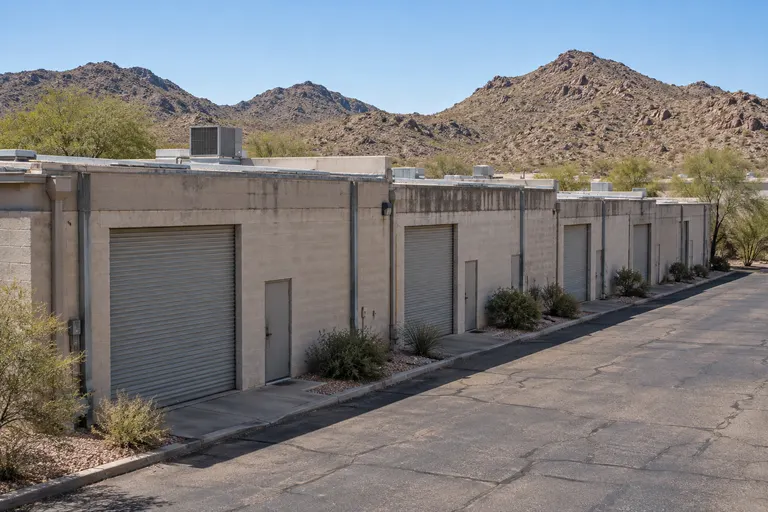
Desert Hills commercial roofing contractor for metal and flat roofs on larger lots. We schedule inspections and repairs around the monsoon and the summer heat.
Roof work in Desert Hills follows the calendar. A check in late spring clears drains and reseals laps before the monsoon arrives on June 15, and a fall visit after September 30 catches whatever the storms opened.
Summer heat limits how long crews can safely work on a roof, so jobs that run into June and July start in the early morning and stop before the worst of the afternoon.
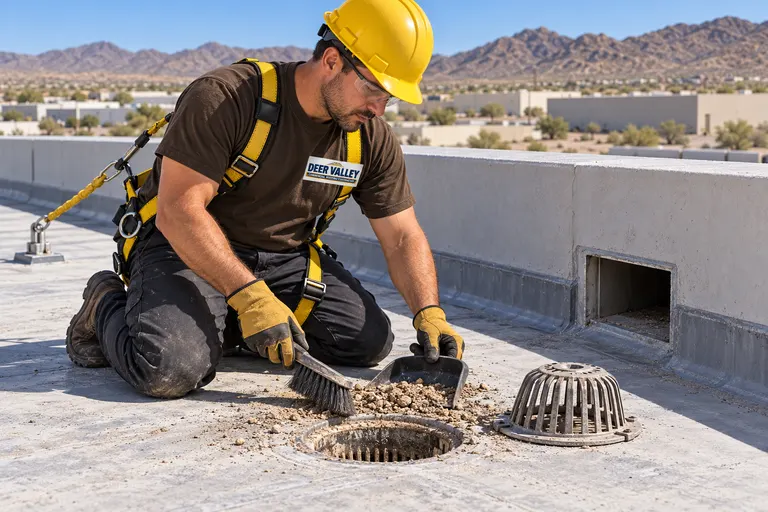
Late spring: pre-monsoon drain and seam check
Summer: early-morning shifts on larger jobs
Fall: post-monsoon inspection and repairs
Permits through Maricopa County Planning & Development
Seasonal Roof Plan
What Each Season Does To A Metal Roof
This plan of a metal building marks five spots and the season that wears each one. Each number matches the list.
1
Fasteners In Summer
Panels expand every afternoon and shrink every night, and by the end of summer some screws have backed out far enough to leak.
2
Lap Sealant After Summer
Butyl and caulk along the side laps dry and shrink through the hottest months, leaving gaps that open during the first storm.
3
Gutters Before Monsoon
Spring dust settles in gutters and outlets, so they are cleared in late spring before the first heavy rain reaches the roof.
4
Rust At Cut Edges
Moisture from monsoon storms sits at cut panel edges and laps, and rust starts there first on older buildings.
5
Ridge Closures After Storms
Monsoon gusts work ridge closures loose, which lets rain and dust blow in under the cap onto the roof deck until the fall check finds them.
What Changes
Roof Gains For Desert Hills Buildings
A roof checked twice a year looks different from one checked only after it leaks. Here is that difference on a Desert Hills metal building.
Before The New Roof
Leaks found by tenants
Problems discovered only when water drips inside.
Summer-worn sealant
Dry, cracked laps going into storm season.
Dusty outlets
Gutters half full when the first storm hits.
Rust left alone
Cut edges corroding a little more every year.
After The New Roof
Two visits a year
Spring and fall roof checks on the calendar.
Fresh lap sealant
Laps resealed before the monsoon starts.
Clear outlets
Gutters emptied ahead of the storm season.
Treated edges
Rust at cut edges cleaned and sealed before it spreads.
Systems
Roof Systems For Desert Hills Properties
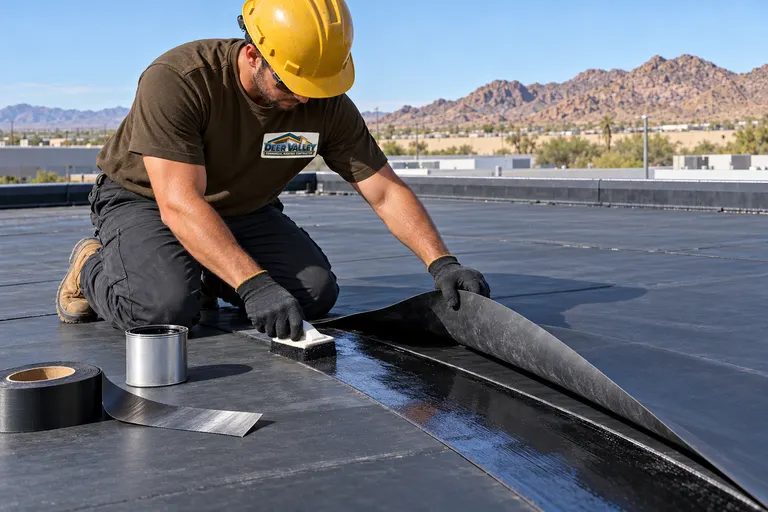
Steel buildings with pitch take metal, and flat sections or additions often carry rubber roofs.
Commercial Metal Roofing
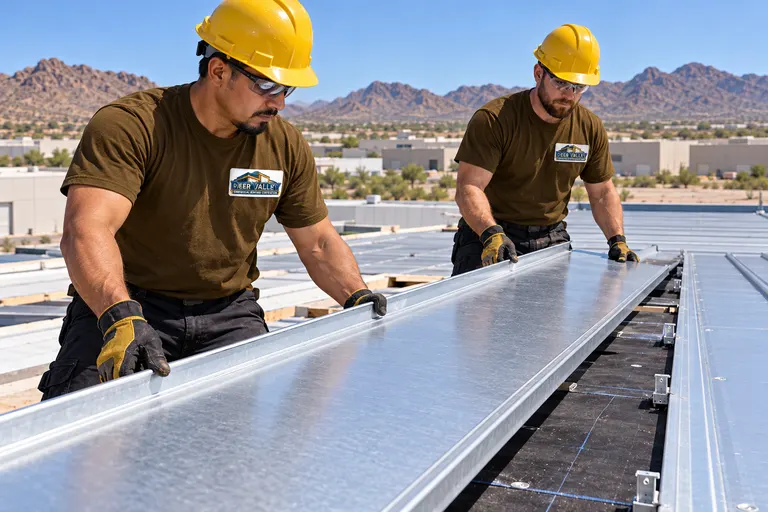
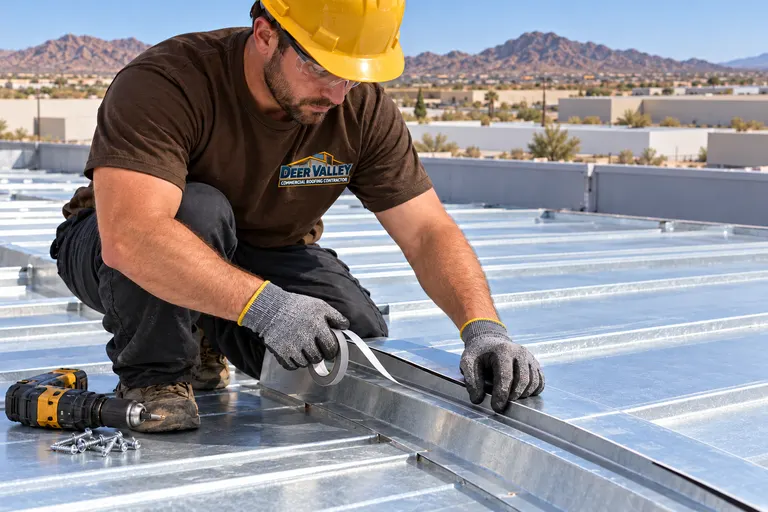
Fastener, lap, and ridge work keeps steel buildings tight between seasons, and badly rusted panels get replaced bay by bay.
Seasonal Questions For A Desert Hills Commercial Roofing Contractor
How often should a Desert Hills commercial roof be maintained?
Plan on inspections at least twice a year: once in spring before monsoon season and once in fall after it ends, plus a check after any major windstorm or hail event.
A good visit clears drains, scuppers, and gutters, checks seams, flashings, and penetrations, looks for ponding, punctures, and storm damage, tightens or replaces loose metal fasteners and sealant, and records findings with photos for your building file.
What happens if we only call when the roof leaks?
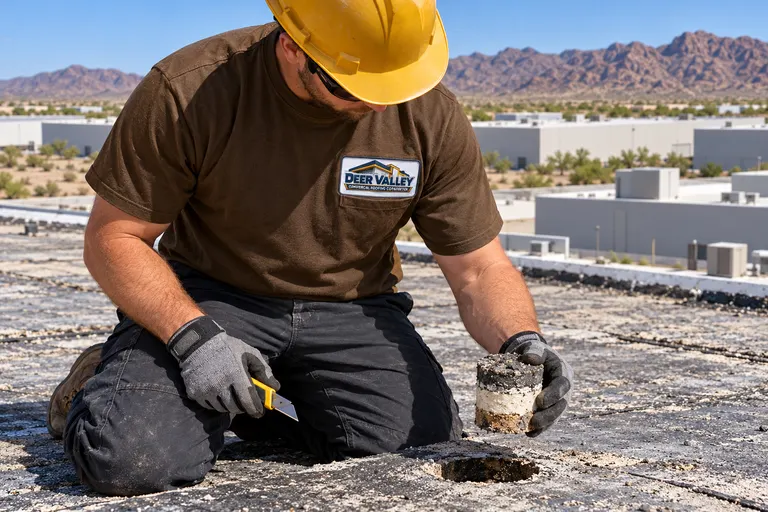
By the time water reaches the ceiling, it has usually soaked insulation along the way. Wet boards have to come out, so a leak found inside costs more to fix than a dry lap resealed in spring.
Can roof work happen in July?
Yes, with early starts. Heat-safety limits push summer shifts into the early morning, so a roof job that runs through July takes more days than the same job in spring or fall. Owners who can choose usually book larger work for the cooler months.
Which permit office covers Desert Hills?
Maricopa County Planning & Development, because Desert Hills sits outside any city. Building applications are filed online through the county's Permit Center, and we check the current requirements with the county for each roof job, since they change from time to time.
Why do screws back out on metal roofs?
Steel panels grow and shrink with every hot afternoon and cool night. Over a few summers that movement walks screws loose, and the rubber washer under each head stops sealing once it shifts. Tightening or replacing them is part of every seasonal visit.
What does a spring visit focus on?
Getting water off the roof. Drains, gutters, and outlets are cleared of dust, dried lap sealant is replaced, and edge trim is checked so the first gusts of the season find nothing loose.
What happens on the fall visit?
Finding what the storms opened. Ridge closures, trim, and laps get checked for wind damage, punctures are marked and photographed, and rust that started during the wet months is cleaned and sealed.
Do flat additions need different care?
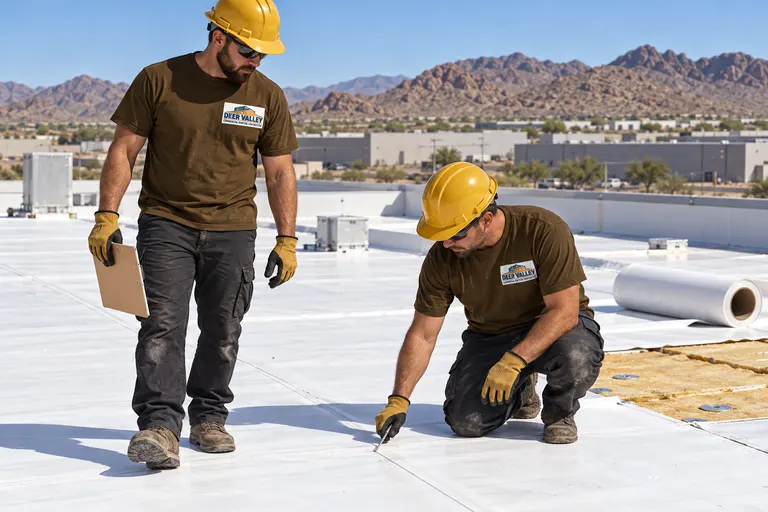
They need closer attention at the joint. Where a flat EPDM or TPO section meets a metal building, the flashing between them moves with both roofs, and it is often the first place a seasonal visit finds an opening.
Set Up Your Desert Hills Roof Visits
Send the roof size and condition for a ballpark figure, or call to put spring and fall checks on the calendar.